Nasi goreng
Indonesia's Famous Fried Rice (Better Than You Think)
If you love Thai fried rice, you need to try this.
Nasi Goreng Recipe – Indonesia’s Famous Fried Rice
Discover nasi goreng — Indonesia’s iconic fried rice made with sweet soy sauce and aromatic spices. Learn what makes it different from Thai fried rice and why every food lover needs to try it.
What Is Nasi Goreng?
Nasi goreng is Indonesia’s most beloved dish. The name is simple — nasi means rice, goreng means fried. But what comes out of the wok is anything but simple.
Think of it as fried rice, but deeper. Darker. More complex. If Thai fried rice is bright and clean, nasi goreng is rich and smoky — a dish that tastes like it has a story behind every grain.
It is eaten for breakfast, lunch, dinner, and every late-night craving in between. It is street food, home food, and five-star hotel food all at once. No other dish in Indonesia does that.
Why Thai Food Lovers Will Instantly Love It
If you grew up eating Thai food, you already have the palate for nasi goreng. Both cuisines share the same love of bold aromatics — shallots, garlic, chilies. Both believe that rice is the heart of a meal. Both understand that the best food comes from a very hot wok and a cook who is not afraid of smoke.
But nasi goreng has one ingredient that changes everything: kecap manis.
Kecap manis is Indonesian sweet soy sauce. It is thick, dark, slightly molasses-like, and it caramelises beautifully in a hot wok. When it hits the rice, it coats every grain in this glossy, smoky, slightly sweet layer that you simply cannot get from regular soy sauce or oyster sauce.
That is the moment nasi goreng becomes nasi goreng. And once you taste it, you will understand why Indonesians say there is nothing else like it.
Nasi Goreng vs Thai Fried Rice — What Is the Difference?
This is one of the most common questions for anyone discovering Indonesian food for the first time. Here is a simple breakdown:
Nasi Goreng | Thai Fried Rice (Khao Pad) | |
Colour | Deep brown, almost dark | Light golden |
Key sauce | Kecap manis (sweet soy) | Fish sauce + oyster sauce |
Flavour profile | Rich, smoky, slightly sweet | Clean, savoury, bright |
Spice level | Medium — sambal on the side | Mild — fresh chilli on the side |
Typical toppings | Fried egg, prawn crackers, cucumber | Fried egg, lime, spring onion |
Best time to eat | Any time — including breakfast | Lunch and dinner |
Neither is better. They are just different expressions of the same beautiful idea: that leftover rice, a hot wok, and good ingredients can become something extraordinary.
What Does Nasi Goreng Taste Like?
Imagine the best fried rice you have ever eaten. Now add a layer of deep, caramelised sweetness that does not make it dessert — it just makes it more savoury somehow. Then add a slight smokiness from the wok. Then add the gentle heat of shallots and garlic that have been cooked down into the rice itself.
That is nasi goreng. It is comforting and bold at the same time. Familiar and completely new.
The first bite usually surprises people. The second bite is when they start to understand. By the third, they are already planning when they will make it again.
How to Serve Nasi Goreng
In Indonesia, nasi goreng is almost always served with:
- A fried egg on top — sunny side up, yolk still runny
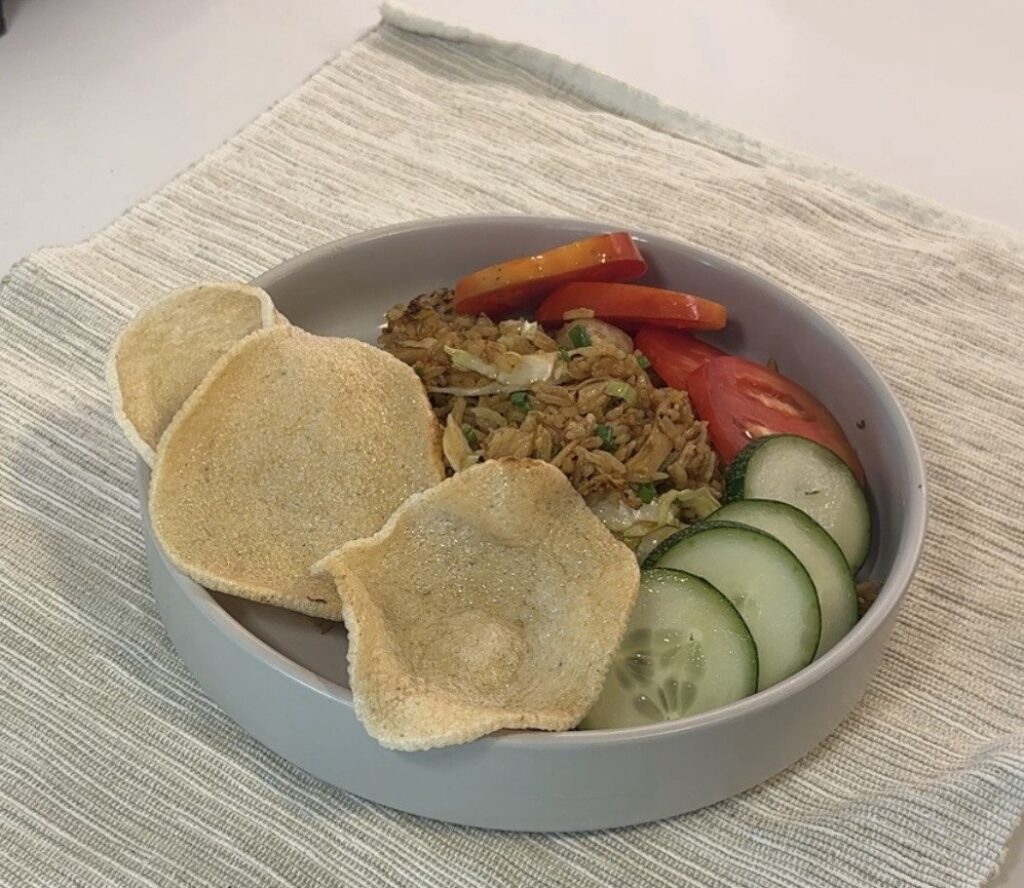
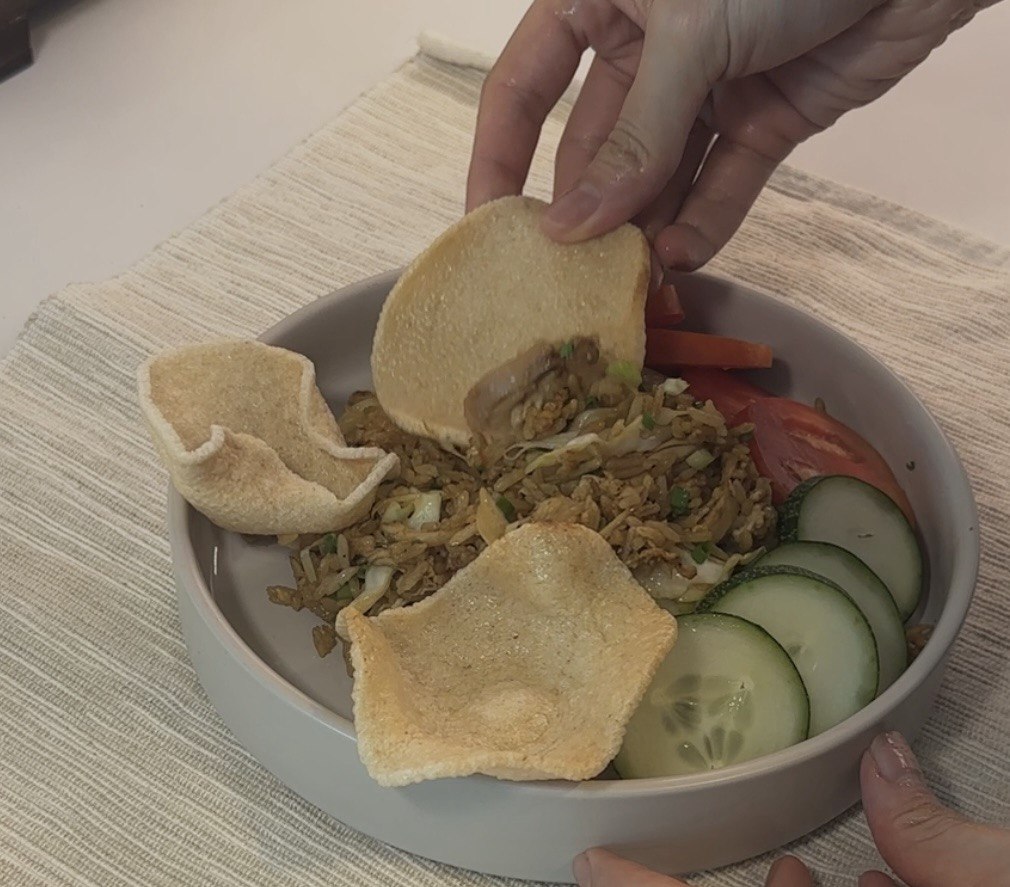
- Prawn crackers (kerupuk) on the side for crunch
- Fresh cucumber and tomato slices to cool things down
The plate is meant to have contrast: hot rice, cool cucumber, crispy crackers, creamy egg yolk. Every element has a job.
Ready to Make It?
The full nasi goreng recipe — with exact quantities, step-by-step instructions, and tips for getting the wok hei right — is waiting for you on this blog.
It covers everything: what rice works best, how to prepare your kecap manis base, how to build the flavour layer by layer, and how to plate it the Indonesian way.
Hungry? The full recipe with step-by-step photos is just below. Everything you need to make proper nasi goreng at home in Thailand — including where to buy kecap manis and which wok works best.
Nasi goreng recipe
2 portions:
Paste:
2 chilli
4 garlic
4 shallot
2 cashew / kemiri
5g shrimp paste
30ml oil
1 tbsp water
Other ingredients:
300gr overnight white rice
1 chicken egg
4 tbsp oil
50g shredded chicken
4 pcs meatball
1 stalk spring onion
40g cabbage
1 tbsp kecap manis (add more for sweeter flavour)
¼ tsp white pepper
½ tbsp chicken bullion
½ tbsp oyster sauce
Method
Step 1 — Make your paste. Add chiilli, garlic, shallot, cashew, shrimp paste, oil and water into a blender, blend the paste till smooth.
Step 2 — Shred and slice. Shred your chicken. Cut up meatballs into bite size, slice cabbage and spring onions.
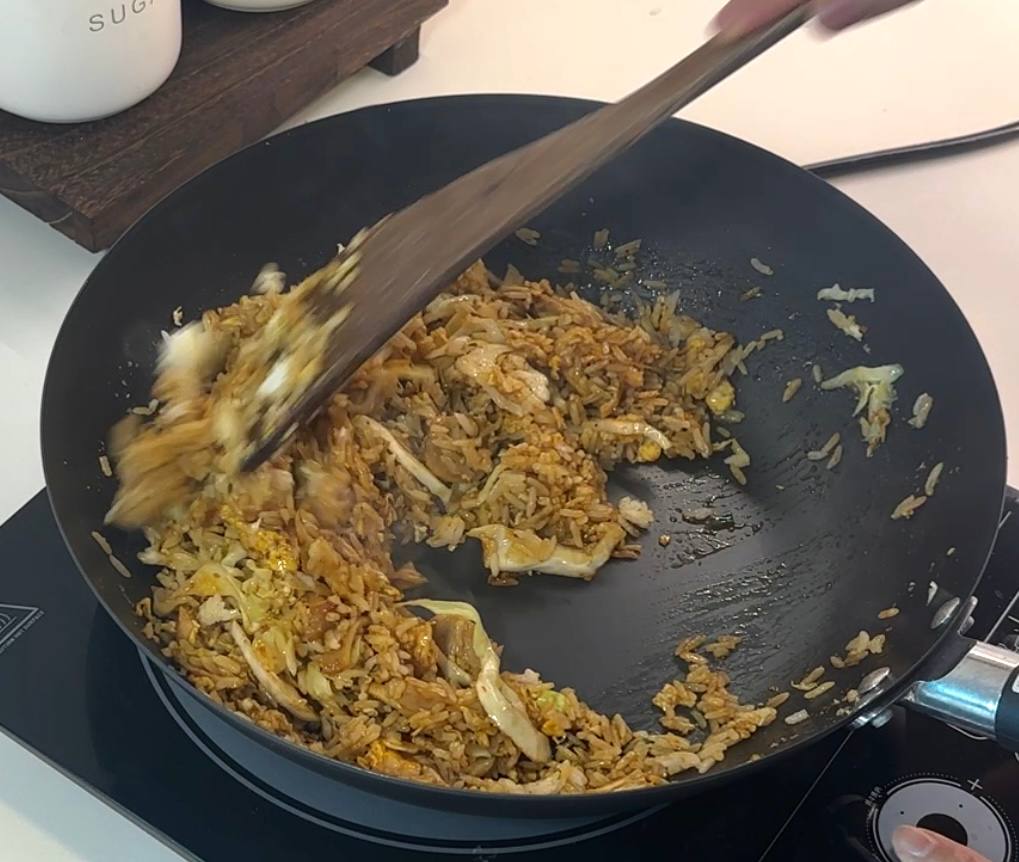
Step 3 — Cooking time. Heat your oil in a small pan until it is very hot — turn off the heat and add eggs with the paste. stir till eggs are cooked and the paste is fragrant. add in chicken, meatball and cabbage. cook in high heat, make sure the cabbage is cooked through. Now add overnight rice, break any lumps. Then add kecap manis, oyster sauce, chicken bullion, and white pepper. on high heat stir till everything is well coated. finish with spring onions.
Step 4 — Serve. Optional – Serve with fresh tomato, cucumber and shrimp crackers (kerupuk)
Frequently Asked Questions
Is nasi goreng spicy? Traditional nasi goreng is mildly spiced in the base. For Thai palates used to chilli, you can add more chilli in the spice blend.
Can I make nasi goreng without kecap manis? You can substitute a small amount of dark soy sauce mixed with palm sugar to mimic the flavour. But if you can find the real kecap manis, it is worth it — the difference in flavour is significant.
What protein can I add to nasi goreng? The most common additions are prawns, chicken, or a simple fried egg. All three work beautifully. Some versions use a combination of two. Vegetarian versions skip the shrimp paste in the base and use tofu instead.
Is nasi goreng healthy? Like any fried rice dish, it depends on how you make it. Using a small amount of oil, adding plenty of vegetables, and using a lean protein keeps it balanced. The rice itself provides sustained energy, and the spice base adds flavour without excessive calories.
What is the difference between nasi goreng and mie goreng? Mie goreng is the noodle version of the same dish — mie means noodles. The cooking method and flavour base are almost identical. If you love nasi goreng, mie goreng is your natural next step.